
Exhibitions
THE COLOR: PURPLE | Discovering Tel Shikmona and the Secrets of Purple
New exhibition
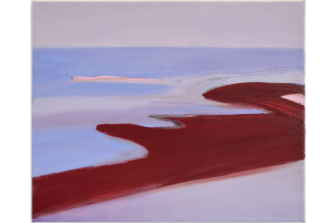
The main focal point of spring 2026 exhibition clusteris the archaeological site at Tel Shikmona (Tell es-samak, “The Fish Mound”) and the production of purple dye from sea snails—an activity that took place at the site in ancient times. The cluster includes a new archaeological-historical exhibition dedicated to the production of purple (argaman and tekhelet), as well as art exhibitions responding to the remarkable presence of the archaeological tell within the urban setting of Haifa and to the traces of lost time embodied in it. These join the “Fish Mound” exhibition, which exhibits local finds attesting to a remarkably long duration of continuous settlement at Tel Shikmona—from the late Bronze Age to the late Byzantine era.
Friday, 30.04.27
The Secrets of Purple | Time capsule
New exhibition
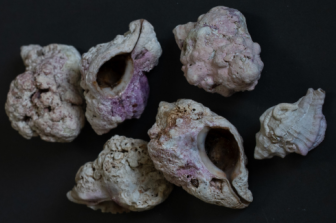
A fascinating journey in the footsteps of antiquity's "purple gold": from the professional secrets of extracting purple dye from sea snails, to the royal textiles of emperors and priests. Inside this time capsule, we uncover the "Haifa connection" through the findings of Tel Shikmona, which served as an industrial-scale purple dye production center throughout the Iron Age. We will become acquainted with the story of the Phoenicians, the "Purple People," and discover how a tiny snail became a symbol of wealth, status, and sanctity across the ancient world.
Maya Gratzfeld: “So small, so humble, I float in the sea” | A homage to Argaman production in Tel Shikmona
New exhibition
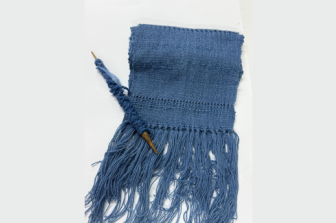
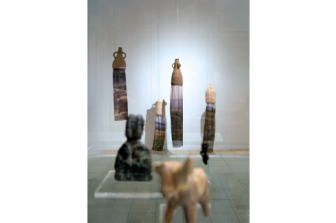
Maya Gratzfeld’s exhibition explores the long-lost traces of purple dye industry in Tel Shikmona. Production of the most valuable dye in the ancient world was the secret to the prosperity of this coastal site, located on the coast of Haifa, only a short distance away from the museum. Purple (Argaman) dye, produced from the bodies of sea snails through a complex chemical process, turned the place into a significant economic and commercial center in ancient times.
Friday, 30.04.27
The Tell and I
New exhibition
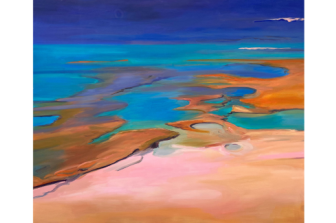
The group art exhibition “The Tell and I” explores Tel Shikmona, responding to its remarkable presence within an urban landscape. Some of the artworks in the exhibition react directly to the experience of visiting and roaming the mound and its environs, or to its significance as an archaeological site. Others create a more abstract dialogue with the coastline or with the unique palette of purple dyes, ranging from tekhelet (purple-blue) to argaman (reddish-purple). The exhibition features a mix of diverse artworks, spanning from two-dimensional to three-dimensional pieces, with different materials, such as canvas, paper or cloth, and a variety of techniques, ranging from photography and painting to sculpture and weaving. The works evoke an almost body-like sense of the landscape, with its beauty and vulnerability—as it is touched by air, light, salt, water and fleeting time.
Friday, 30.04.27
Blood - Money - Ships | The Reparations Agreement with Germany as a Catalyst for the Growth of the Israeli Merchant Fleet
Now at the Museum
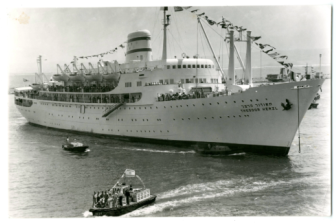
The exhibition displays models of several ZIM shipping vessels, designed for various purposes. The first ship received under the agreement, Dagan, was used for cargo, as was the Ampa'al. The ships Israel and Zion were intended for mixed use of passengers and cargo, while Jerusalem served as a passenger ship. The ship Har Gilad, owned by El-Yam company, was used for general cargo and refrigerated transport. The exhibition also features historical moments in the ships' stories, documented in sources including news diaries, photographs, and promotional leaflets.
Glassware in Antiquity
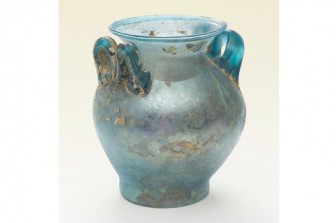
The secret of glassmaking was already known in the ancient world: take sand that is rich in silica, quartz, and potassium salts, heat it gradually to 1100 Celsius, and you will get an almost liquid, mailable material. Once the liquid has cooled down and solidified, you will have lumps of raw glass that can be remelted and fashioned into vessels and jewelry.
We’re on the Map! Cartography—The Art of Mapmaking
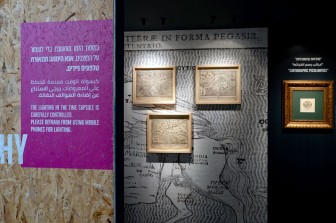
Cartography, the science of maps and mapping, is an ancient craft that may even predate the invention of writing. Already in antiquity, maps of cities and countries had been drawn up in various civilizations around the world, such as China, Mesopotamia, and Greece.
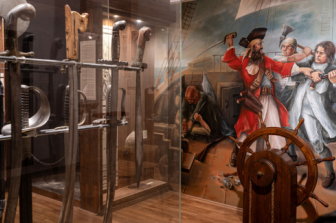
Pirates - Between truth and legend
The phenomenon of piracy - piracy - has evolved since man began trading in ships, and it has flourished mainly in areas of loose rule. Piracy existed in ancient times in the Mediterranean and the Sea of China and reached its peak in the seventeenth century in the Atlantic Ocean, with the rise of European colonialism and the development of trade routes with the "New World".
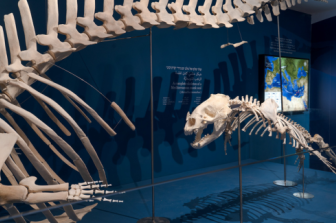
Mammals of the Deep | The Wonderful World of Marine Mammals in the Mediterranean and in the Gulf of Eilat
Now at the Museum
This exhibition is a product of this special bond between humans and nature. Specimens that indicate a highly diverse presence of marine mammals in our region have been brought to the museum for the very first time. Marine mammals of the Mediterranean and of the Gulf of Eilat, which is, in fact, an extension of the Indian Ocean, include various species of cetaceans (whales and dolphins) and one species of seal. The telltale findings that testify to their presence have been collected by a very special group of people, members of IMMRAC, who devote their time and energy to the task of studying the world of marine mammals and assisting in the protection of their habitat.
Saturday, 26.06.27